First impressions are important — at EXP, we understand how that applies not just to people, but also to the spaces we frequent. Interior design ensures a site goes beyond intuitive navigation to evoke positive emotions in its inhabitants. With over 20 years of experience across government, commercial and institutional projects, Senior Interior Designer Sheila Golez, IDNB, IDNS, NCIDQ, IDC is deeply familiar with that balance.
“People connect with how they’re moved,” Sheila said. “A room should be flexible and easily functional across users, time and purposes so that it can be effectively utilized long-term.”
So how is this accomplished? By understanding interior design in the context of holistic building science.
For example, imagine a workplace. You walk in and encounter stifling, humid air, fluorescent lights, disjointed cubicles that obstruct your full view of the room and a flat, uninspiring color palette. Dull? Certainly. Common? Unfortunately.
“Design is about more than looks,” Sheila said. “As interior designers, we move beyond creating spaces toward shaping environments that encourage connection and endure thoughtful, timeless design. We work in conjunction with mechanical experts who ensure quality air flow, electrical engineers who control the lighting scheme to prevent headaches or vision impairment and a whole host of other professionals.”
An interconnected, multidisciplinary model
 EXP is structured like a web network for that precise function — to support an interconnected system in which employees can collaborate across disciplines. With offices across the globe and specialists in each discipline from MEP to technology design to water management, each of our experts has access and connections to a wealth of in-house knowledge.
“We don’t need to search for the A team — we already have a talent pool we can reach out to and consult with,” Sheila said. “Support is just a phone call away.”
On the strategic side, early integration of interior design services reduces disconnects, improves coordination and ultimately leads to stronger project delivery. It shifts the design approach from reactive to proactive, and encourages a fundamental understanding of brand identity, operational needs and user experience.
Seamless collaboration amidst project variety
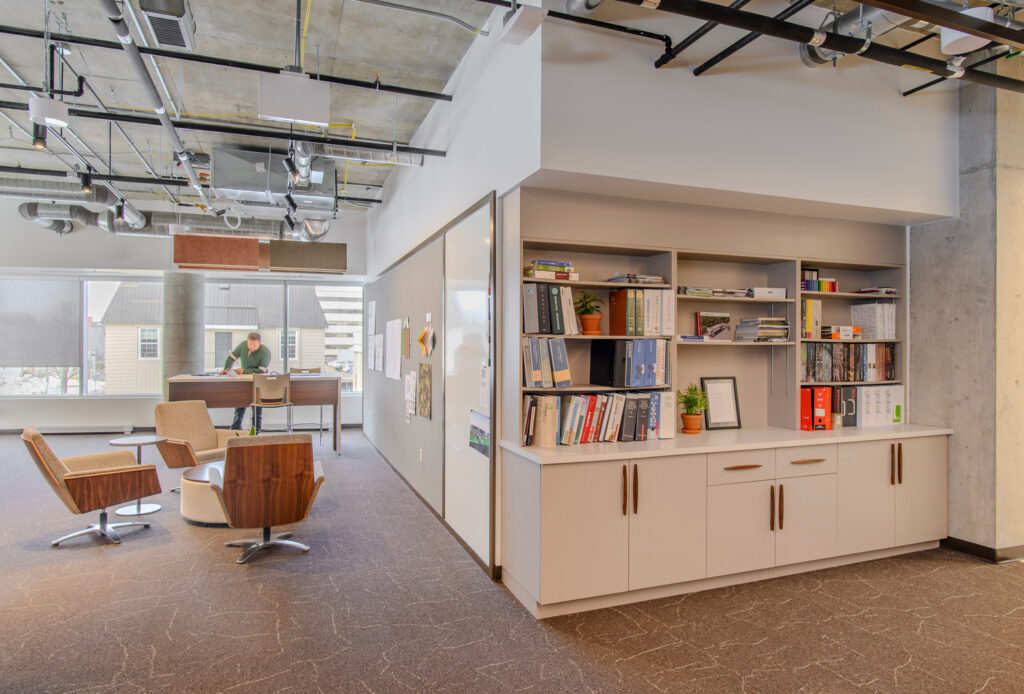
That flexible approach remains true regardless of project type. Recent workplace renovations including the award-winning 140 Carleton Office and 555 Mapleton Road Office considered the natural wayfinding power of the space to encourage conversation and engagement across employee bases. Rather than imposing behavior, the design enables it organically.
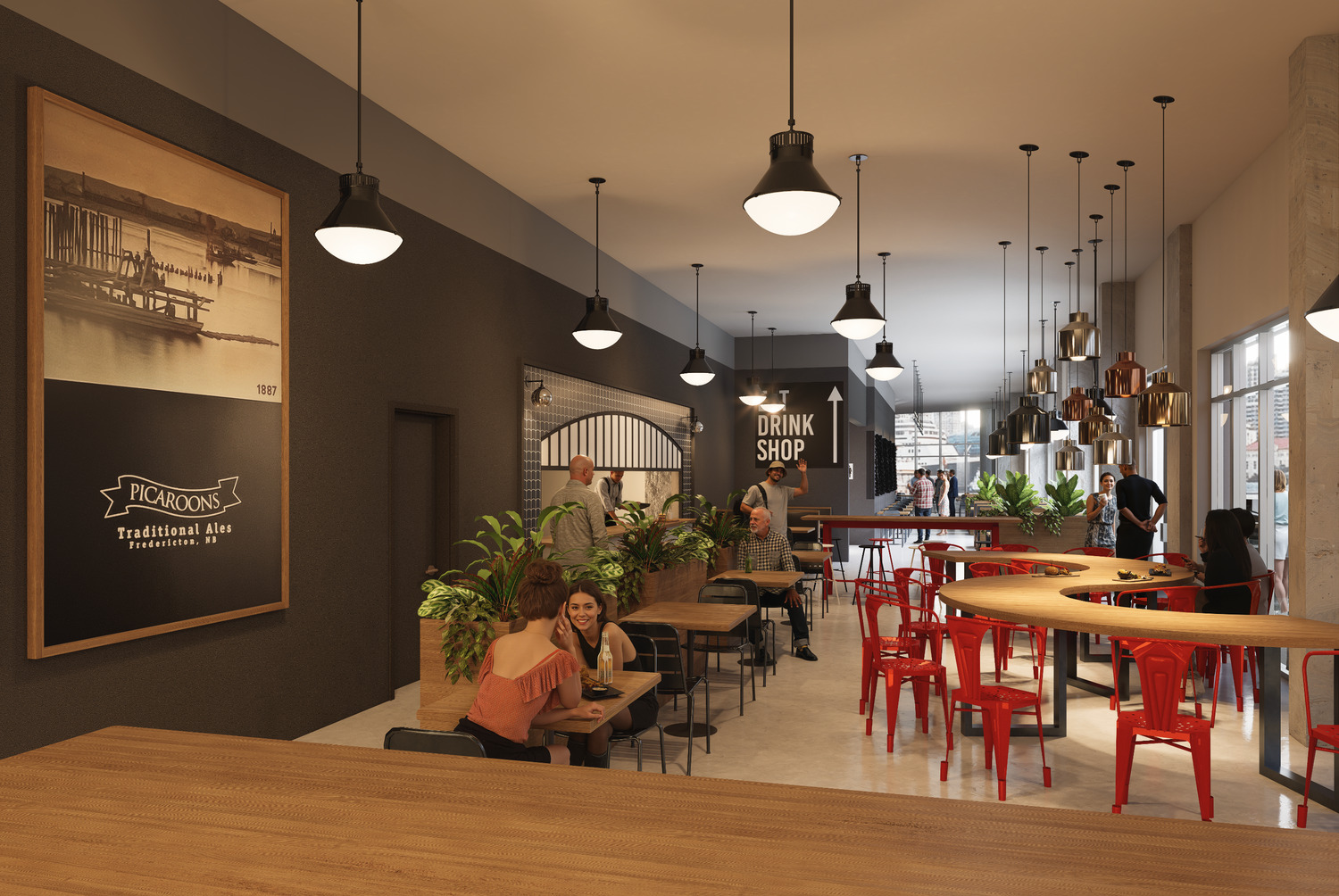
EXP also designed a 9,000 sq ft local waterfront brewery as part of the Fundy Quay development in St. John, New Brunswick. Around 196,000 cruise ship tourists circulate the area each year, and the space had to accommodate a range of customers and a variety of needs. Between a 2,000 sq ft kitchen and distillery, the interior design team worked to blend the brand’s rustic aesthetic within the modern space.
“We specialize in the full user experience, which involves the entire team, construction crew, client and stakeholders,” Sheila said. “We want to future-proof our client’s business and maximize the space to fit the theme and goals of the organization.”
From detailed strategy to final execution
 Understanding project logistics such as scope, timeline and budget is an integral part of the process. Beyond the final design, project and schedule management are crucial in achieving an impactful end result.
“A project doesn’t need to be particularly glamorous to be successful,” Sheila said. “It’s not just about designing, it’s about managing the expectations and outcomes of projects while avoiding unnecessary escalation.”
Above all, it’s most important to take time and determine the appropriate vision for the space. How do you want users to move through the space? What are the social dynamics you want to prompt spatially? How do you want people to feel in the environment?
These are questions Sheila emphasized as absolutely essential to long-term resonance. Trends are cyclical, but flow and feel endure across time and project type.
“Ultimately, our work transcends design to influence and develop entire communities,” Sheila said. “That’s a task we don’t take lightly, and we have the resources to deliver.”
Contact Sheila Golez to learn more about our interior design projects and capabilities.