By: Rasool Nemati, PhD., PE, Director, Pavement Design, Materials and Testing | EXP
The challenge facing today’s heavy-duty facilities
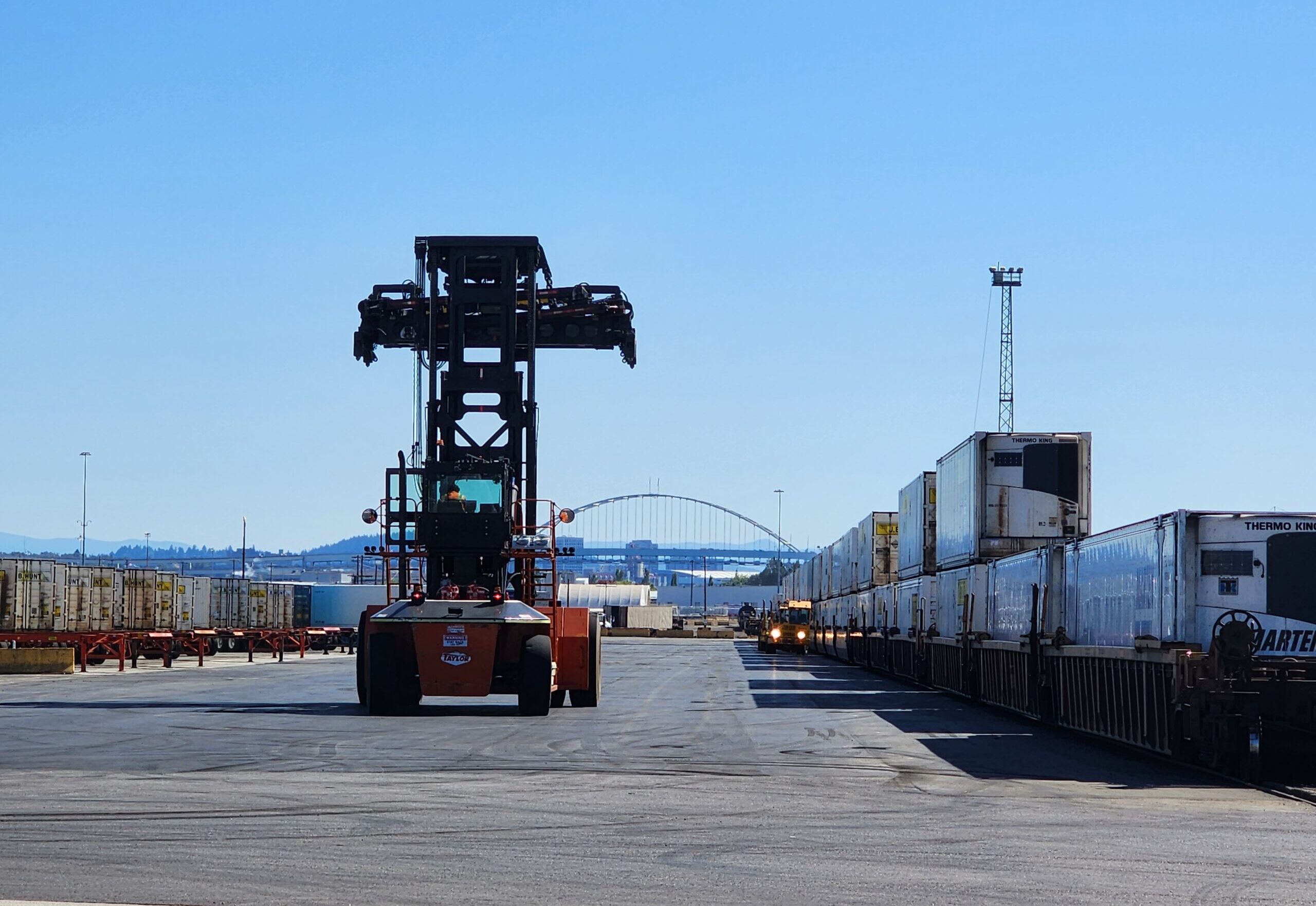
Pavement systems in ports, intermodal terminals, airports and industrial facilities endure loading conditions that are fundamentally different from conventional roadways. These pavements are required to support extremely heavy equipment, slow-moving loads, frequent stopping and turning, as well as concentrated storage in highly localized areas while remaining in service nearly continuously. Many facilities are operating on pavements not originally designed for this combination of loading intensity, traffic patterns and operational constraints.
In practice, the interaction between equipment type, load configuration, repetition and unpredictable movement patterns, combined with limited opportunities for construction or maintenance, makes the heavy-duty pavement design even more challenging. Pavement sections that may appear structurally adequate under traditional design assumptions can experience premature distress when subjected to heavy channelized traffic, container stacking or high shear stresses due to the dynamic loads not considered in the original design.
The core issue is rarely a lack of available materials or design methods.
The real challenge is developing pavement solutions that reflect how facilities operate under various loading and environmental conditions in various zones and translating technical options into systems that are cost effective, reliable and constructable under real-world constraints.
Pavement failures in such facilities are often not just the result of poor materials or construction. In many cases, these failures occur because the design did not reflect operational reality including the load magnitudes and traffic patterns in high stress zones.
Moving from empirical design approaches to performance-based design
While empirical design approaches may provide a good starting point for the pavement section, they are not always sufficient for heavy-duty applications. In environments with extreme loading and limited operational flexibility, owners benefit from design approaches that explicitly evaluate how pavement systems respond to stress and environmental conditions.
At EXP, we apply mechanistic-empirical and finite element based pavement design methods supported by field evaluation and performance modeling to understand stresses, strains and material behavior within the pavement structure. This allows different design alternatives to be evaluated objectively based on actual conditions, expected performance, durability and maintenance needs at various reliability levels.
Having worked on various port, intermodal, airport and industrial pavement projects, I’ve seen how valuable this shift can be. When decisions are framed around performance rather than convention, owners gain clearer visibility into trade-offs and long-term implications, helping them make informed decisions based on budget availability and long-term capital investments.
Our pavement evaluations and designs begin with a clear understanding of a facility’s day-to-day operations. We focus on equipment types and load configurations, traffic repetition and channelization, functional zoning and practical limits on construction and maintenance windows. That operational context drives every decision that follows. We implement commercialized mechanistic pavement design approaches, including finite element-based software developed specifically for heavy-duty industrial pavements that can analyze pavement response under various loading circumstances. This allows us to develop durable pavement sections that address owners’ needs with regard to pavement longevity, construction costs and maintenance strategies.
Effective solutions for design and construction
In high-stress facilities, construction is often constrained by limited access, tight schedules, phasing requirements and the need to maintain ongoing operations. Contractors must manage material availability, sequencing, quality control and safety within very narrow windows.
One of the lessons I carried forward from years of pavement design and construction support is that designs that ignore constructability rarely perform as intended. We deliberately integrate constructability into our pavement solutions. This includes evaluating material selection, layer configurations, construction tolerances and phasing strategies early in the design process to reduce delivery risk and minimize disruption.
Whether a solution involves asphalt, concrete, composite systems or rehabilitation of existing infrastructure, our goal is to develop pavement strategies that can be built reliably and perform consistently in service.
Addressing the total cost of ownership and long-term risk
For owners, pavement performance is inseparable from total cost of ownership. Initial construction cost is only one component of a much larger equation that includes maintenance frequency, repair duration, operational disruption and asset life.
Through lifecycle cost analysis, performance modeling and scenario evaluation, EXP helps clients understand how different pavement strategies affect long-term cost and risk. This approach supports informed decision-making and allows owners to justify investments not solely on the initial cost but also based on durability, reliability and long-term value.
Resilient and sustainable pavement design
As facilities continue to evolve, the demand for resilient and adaptable pavement infrastructure will only increase. We are committed to supporting our clients with practical, experience-driven solutions that meet these challenges head-on. Resiliency and sustainability are integral considerations in the design of heavy-duty pavements, particularly for ports and industrial facilities exposed to long service lives and evolving environmental conditions. We evaluate pavement alternatives with an emphasis on long-term performance, adaptability and risk, including future challenges such as sea-level rise, increased moisture exposure and changing operational demands that can directly affect port infrastructure.
Sustainability is addressed through performance-based design and material selection strategies that reduce lifecycle impacts. This includes evaluating opportunities for material reuse and recycling, optimizing pavement sections to extend service life and minimizing the frequency of major repairs. These approaches help reduce construction and maintenance costs while supporting cleaner facilities and more resilient pavement systems over time.
Advancing industry research
In parallel with project delivery, our teams support the advancement of pavement engineering practice through research, technical collaboration and education. My involvement in industry research initiatives and academic engagement focuses on improving the understanding of pavement behavior in high-stress environments and translating that knowledge into practical engineering guidance.
This includes collaboration with national research organizations such as ASTM International, National Asphalt Pavement Association (NAPA), National Center for Asphalt Technology (NCAT) at Auburn University and the University of New Hampshire (UNH) through the development of practitioner-oriented technical material. These efforts help ensure that emerging technologies, testing methods and design approaches are evaluated rigorously and applied responsibly by strengthening the solutions we ultimately deliver to clients.
What’s next?
High-stress facilities require pavement solutions that are intentionally engineered around operational constraints, extreme equipment loads, limited construction windows and performance expectations that directly affect business continuity. By shifting from prescriptive standards to performance-based, mechanistic design, owners gain clearer insight into pavement behavior over time and the trade-offs associated with different strategies. Successful solutions balance structural reliability with constructability, contractor realities and total cost of ownership, recognizing that long-term value extends well beyond initial construction cost.
As freight demand grows and industrial operations become more complex, the risks associated with pavement underperformance increase. By combining engineering judgment, practical experience and research insight, we help clients make informed, defensible decisions and develop pavement systems that perform reliably over the long term.
Learn more about Infrastructure at EXP, and connect with me for your heavy-duty pavement solutions at Rasool.Nemati@exp.com.