Rothesay Avenue / Retail Drive Transformation
Saint John, NB, Canada
Transformation of an important regional corridor
Rothesay Avenue is one of Saint John’s most important transportation corridors, carrying approximately 30,000 vehicles per day and providing a critical connection to NB Route 1.
The corridor serves a diverse mix of commercial, industrial and retail destinations and functions as a primary commuter route for the region. Its safe and efficient operation is essential to both everyday mobility and the long-term economic performance of the city.
Transformation of intersections within the corridor
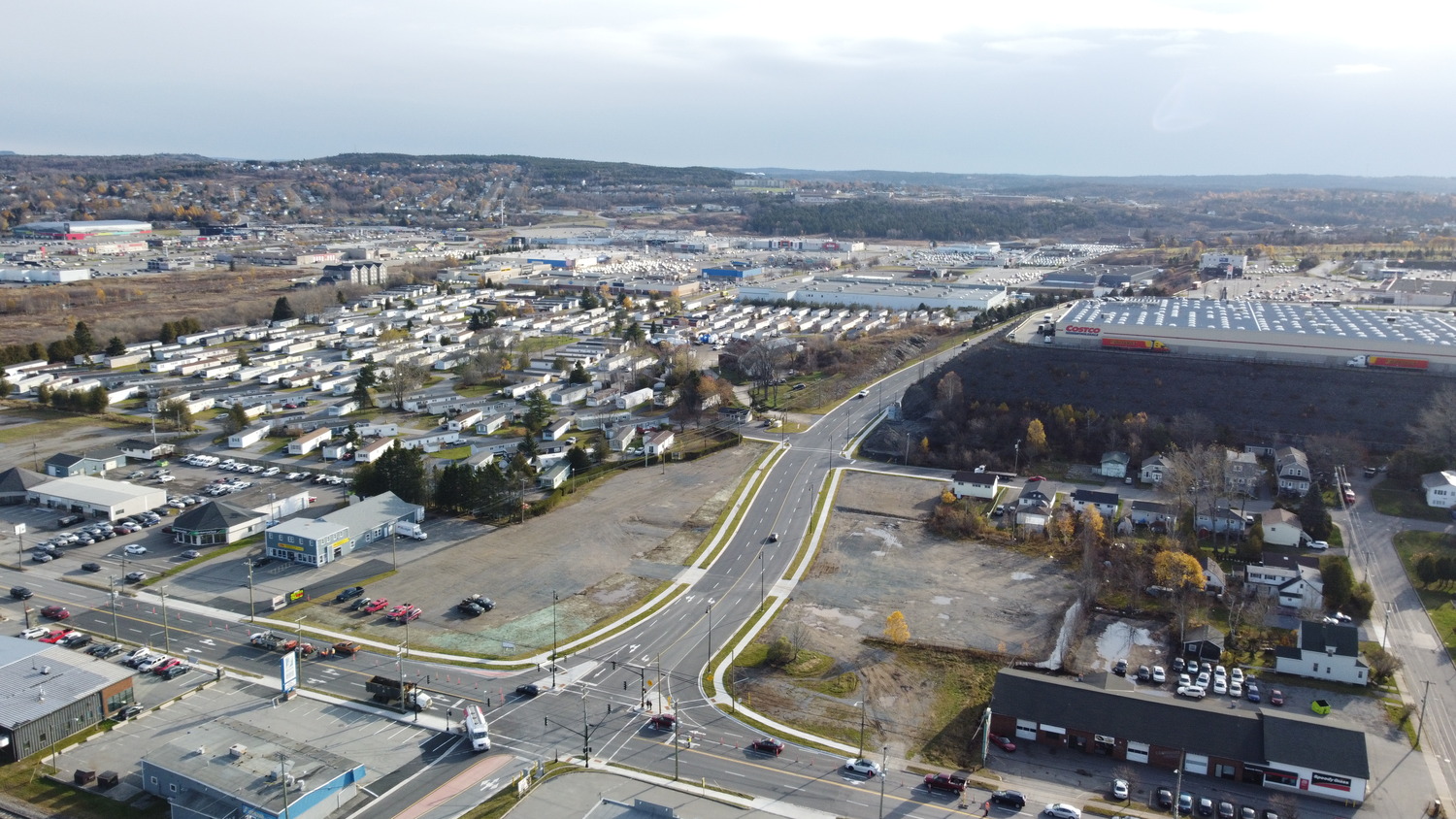
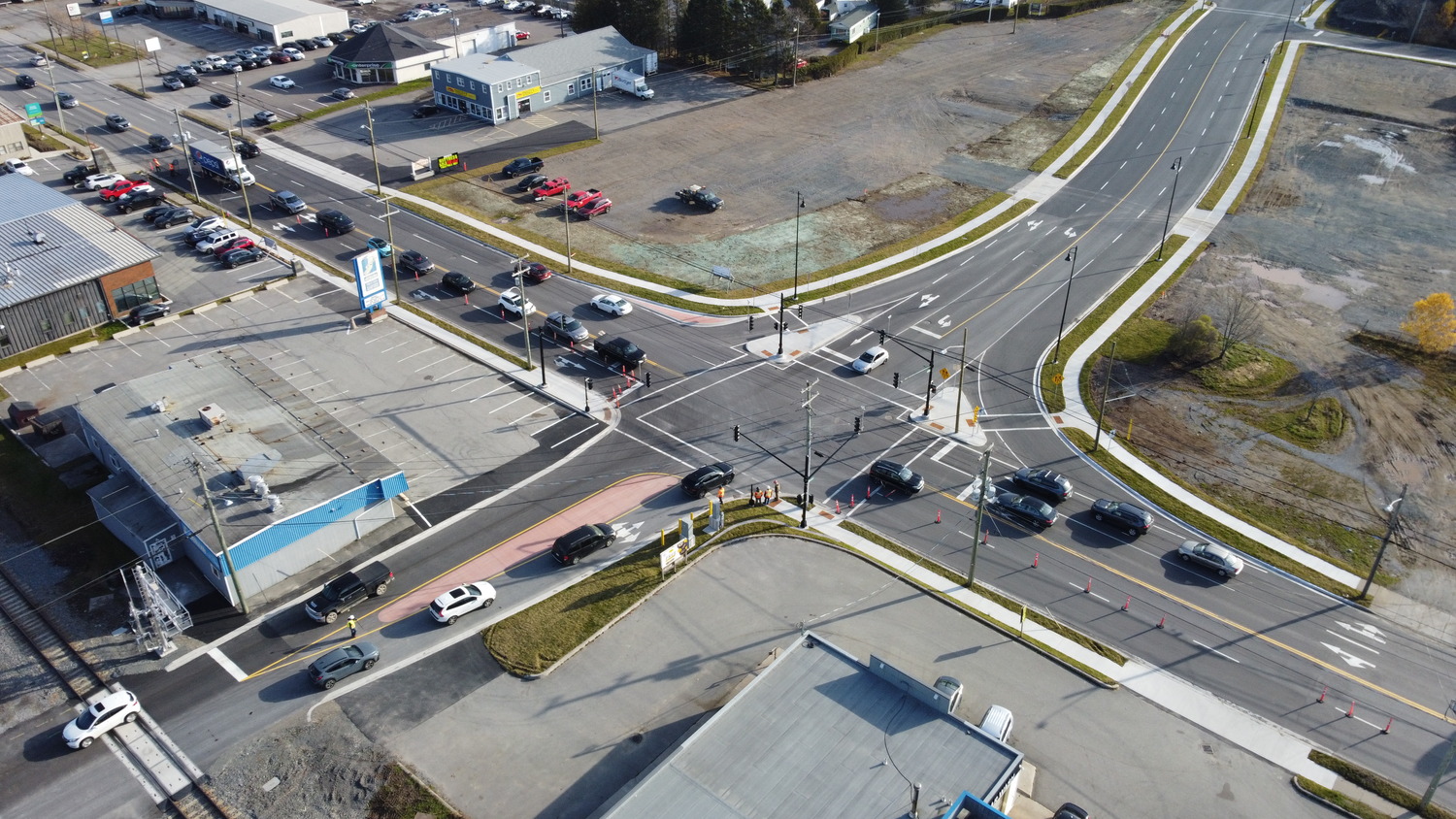
This project transformed a complex and constrained roadway environment by replacing two closely spaced, offset signalized T-intersections with a single, modern 4-way signalized intersection. The new configuration simplifies driver decision making, reduces conflict points and significantly improves traffic flow and safety.
Designed and delivered by EXP, the project was partially funded by Canada and the Province of New Brunswick under the Integrated Bilateral Funding Agreement program.
Improving safety and corridor performance
The primary objective of the project was to eliminate operational and safety challenges created by the former offset intersection arrangement. By consolidating movements into a single four way intersection, the design improves efficiency, increases throughput, and enhances overall level of service along this high volume corridor.
Updated roadway geometry, improved sightlines and intuitive lane alignments result in more predictable and safer travel for motorists, pedestrians and transit users alike.
In addition to improving current operations, the intersection was designed with long term flexibility in mind. The layout allows for future capacity expansion along Retail Drive with minimal disruption or removal of existing infrastructure, protecting prior investment and reducing future capital costs.
Engineering innovation in a constrained environment
The project required innovative engineering solutions to address challenging subsurface and site conditions. Very soft, compressible soils necessitated the use of a granular surcharge to accelerate settlement prior to construction. This approach ensured long term roadway stability while allowing material to be reused on site, improving sustainability and cost efficiency.
Integrating with railway systems
The project also involved close coordination with the railway authority to modernize the Ashburn Lake Road rail crossing. A key safety enhancement was the implementation of simultaneous preemption, fully integrating the railway warning system with the new traffic signals. This advanced system provides immediate signal preemption upon train detection, ensuring adequate track clearance time and significantly improving multimodal safety.
Community, economic and environmental benefits
Completion of the project has delivered measurable social and economic benefits to the community and the region. Reduced delays and smoother traffic flow lower travel costs, improve productivity and enhance network resiliency. Modernized geometry, upgraded rail crossing protection and improved pedestrian infrastructure contribute to safer and more accessible travel for users of all ages and abilities.
Beyond transportation performance, the project enhances the public realm through the addition of green space, street trees and decorative lighting. These additions create a more attractive and welcoming gateway to Saint John’s largest commercial district.
Reduced idling and improved traffic operations also contribute to lower greenhouse gas emissions, supporting the City’s broader environmental and sustainability objectives.
Services
Transportation Planning, Traffic, Signals, Environmental, Roadway Lighting, Municipal Engineering, Geotechnical, Construction Administration